
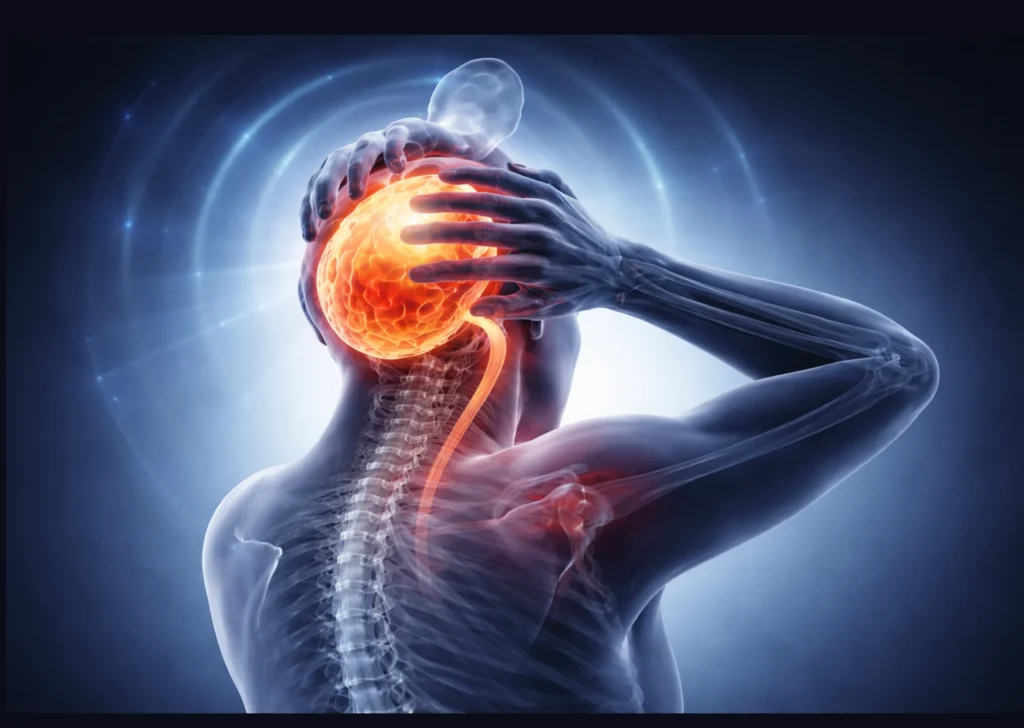
When most people think of migraine, they describe a visual aura of wavy vision, followed by an intensive headache that lasts several hours, requiring complete bed rest in a dark room until the symptoms pass. While 28 million Americans are diagnosed with this classic type of migraine, other forms of migraine are even more common, and widely misdiagnosed.
Symptoms of migraine: Migraine is most often a lifelong condition that can vary within an individual over the lifespan. One can experience a few to several classic migraines with severe head pain in their teens or twenties, with the presentation of migraine changing significantly over time. Symptoms of vertigo, nausea, motion sickness, light and sound sensitivity can increase, while the number of episodes of severe headache can decrease. To further complicate the diagnosis, if headache is present at all, it can be dull and low grade and can occur at different times than the other associated symptoms. Many patients will have a mild, low-grade headache that is constant, rather than the headache that comes and goes, while as many others have no headache at all. Additional symptoms of migraine can include dizziness, vergigo, nausea, sinus pain and pressure with no sinus disease, facial or head pain at the surface, stuffy or runny nose, ringing in the ears, sharp ear pain that lasts seconds, visual disturbances, retention of fluid, anxiety, sensitivity to lights and sound, and fatigue/lethargy.
What is Migraine?: People with migraine typically have an inherited problem in the ion channels in the brain. It can also occur after brain injury or concussion. This disorder results in a sensitive brain. Abnormal electrical activity occurs in the brain, resulting in changes to the flow of nutrients and neurochemicals in the brain. This leads to changes in blood flow, and hyperexcitability of the nerves in the brain, face, neck and inner ear.
What Triggers Migraine?: The sensitivity of the migraine brain results in a low threshold to stimuli such as loud noise, bright lights, busy environments, moving vehicles, or strong smells. Tolerance to fatigue and stressors goes down. Exposure to excessive motion or intensive exercise can trigger migraine. Some people become so oversensitive that day to day life becomes a regular trigger due to the low threshold for stimulation. In addition, triggers may include weather changes, low blood sugar, dehydration, sleep pattern changes, and diet. Dietary triggers are common, but can be very complex. In many cases, symptoms of migraine occur days later, or only after a certain amount or combination of foods occurs. Common food triggers include: red wine, aged cheese, yeast in bread and yogurt, coffee, MSG, artificial sweeteners, nitrates in packaged foods and processed meats, and gluten/wheat products. Current evidence indicates that the real issue behind diet and migraine ultimately is inflammation, and the gut brain axis connection. Physical stress such as heat, hunger (low blood sugar), and lack of sleep are common triggers. Hormone changes associated with menstruation or menopause are also known triggers.
Treatment: Understanding your brain, getting the proper diagnosis, and learning about trigger management is key to success. While elimination diets have historically been the first step in gaining understanding about food triggers, an anti-inflammatory whole food diet with adequate hydration is key for most people. Regular meals, sleep patterns, and exercise are other keys to success. Medications are at times required to break the cycle of chronic migraine. Medicines that elevate the threshold above which migraine is triggered are most beneficial in the long run. Over the counter migraine medications such as ibuprofen can cover the symptoms but can increase the frequency of migraine in a rebound process. Medications originally used for blood pressure control, seizures, or depression are some of the most effective at controlling the sensitivity of the migraine brain. But modern CGRP medications work the best for most, with the fewest side effects. Working with a physician who specializes in complex neurological migraines is paramount.
Migraine and Vertigo: Over 50% of patients with migraine experience vertigo. Many patients with vertigo and no current headache have a history migraine in their past, or a strong family history is present. The prevalence of migraine in patients with Meniere’s disease is 50-85%, while the general population incidence is 13%. ENT and Neurology physicians specializing in dizziness are recognizing the connection between Meniere’s disease and migraine. It has recently been discovered that the tiny blood vessels in the inner ear are innervated by branches of the same nerve (Trigeminal Nerve) that innervates the blood vessels in the brain that are most often affected in migraine. Additionally, CGRP receptors are located both in the brain and the inner ear. It is becoming clear that many patients with symptoms of Meniere’s disease respond well to adding treatment for vestibular migraine.
Physical Therapy for migraine and dizziness: The best outcome is indeed the broad approach of anti-inflammatory lifestyle, trigger management, regular sleep, and exercise. Additional highly effective techniques in our clinic include neurologic dry needling, vagus nerve stimulation, photobiomodulation, and neurofeedback. For many patients with chronic conditions, the combination of medication and neurologic vestibular rehabilitation will be most effective. When an individual has been dizzy for several months, the balance system adapts to the symptoms. This results in excessive use of vision to stabilize balance, making busy visual environments, reading, and computer work difficult to tolerate. The vestibular system can also be suppressed by the brain, resulting in difficulty walking in the dark and limiting tolerance to rapid head motion. PPPD is a common co-occurring diagnosis. We have high success rates working with vestibular migraine, as it is one of the most common diagnosis in our practice, and the most common cause of vertigo in adults.