
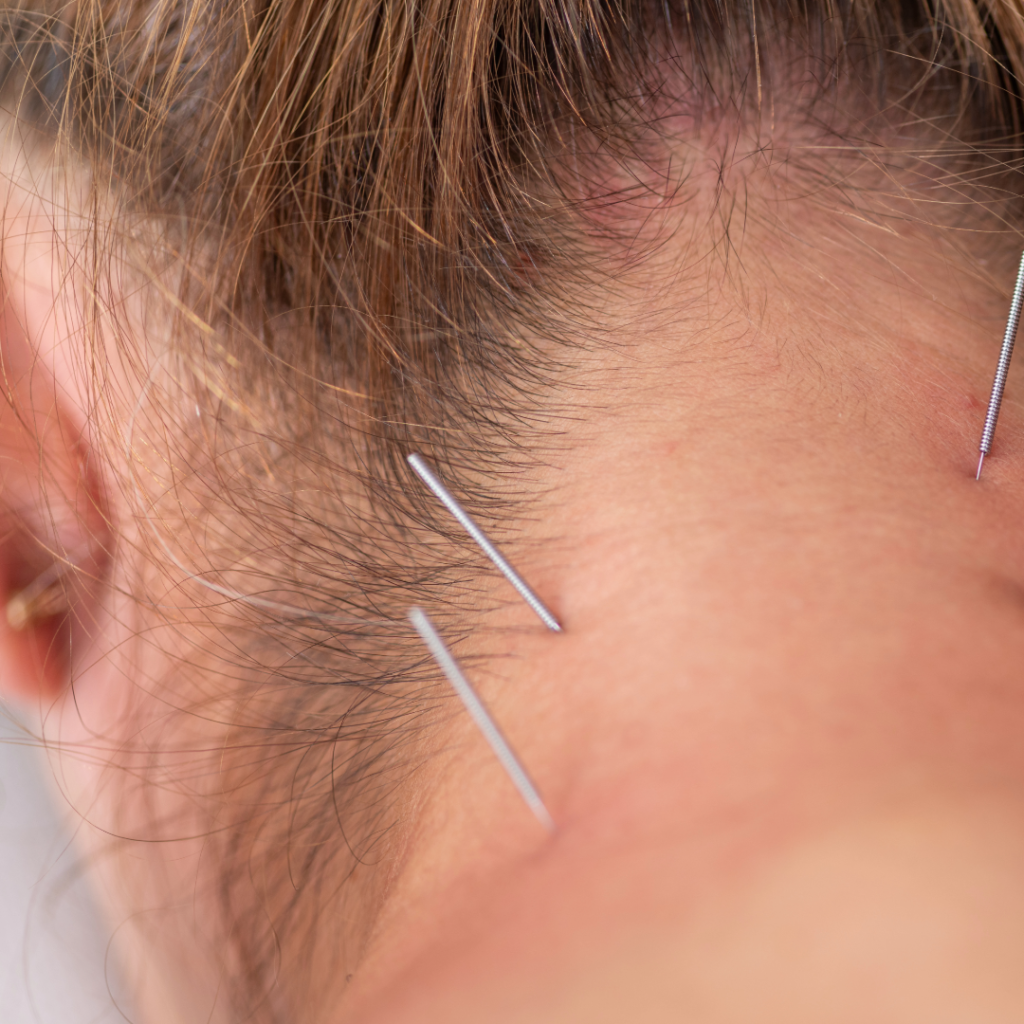
Integrative Dry Needling: Our approach focuses on areas of neurogenic inflammation guided by a peripheral nerve mapping model, immune cell behavior (e.g., mast cells, microglia, cytokines), systemic effects of inflammation, and its role in modulating both acute and chronic inflammatory responses. The focus is less on trigger points as in traditional muscular dry needling, and more on the neurological system, targeting inflammation and irritability of the nervous system, as well as tissue healing. Neurological dry needling is a gentle approach to needling compared with traditional trigger point needling where the treatment is more aggressive to illicit a twitch response. Most clients report minimal to no discomfort with treatment.
Migraine- Neurogenic inflammation around the trigeminal and greater occipital nerves are very prevalent in migraine. Dry needling targeting these nerves can flush out the inflammation and break the cyclical pattern of migraine. Not only can migraine symptoms be addressed acutely, but it can also raise your threshold to be less likely to get another migraine attack. Also, by helping improve autonomic nervous system homeostasis, needling can help remove sympathetic nervous system triggers from the picture.
Cervicogenic dizziness- Dysfunction in communication between the proprioceptors of the upper cervical spine with the eyes and vestibular system via the cervical-vestibular -ocular reflex networks can cause dizziness. Dry needling tense tissues in the neck helps to rebalance the reflex, and symptom reduction is often immediately following treatment. Most vestibular conditions have a layer of cervicogenic dizziness secondary to compensations that occur with chronic dysfunction.
Multiple Sclerosis- Patients with MS often suffer from chronic spasticity. Dry needling is an effective modality in helping to reduce overall spasticity which hinders functional mobility. Dry needling is also quite effective at helping to manage chronic pain that is associated with MS.
Bell’s Palsy- Dry needling may offer relief for individuals with Bell’s palsy, a condition characterized by facial muscle weakness and spasm due to inflammation or compression of the facial nerve. By targeting the muscles in the face and neck, dry needling can help improve blood flow and promote normal muscle tone, alleviating some of the discomfort and stiffness associated with Bell’s palsy.
Parkinson’s Disease- Rigidity associated with PD can contribute to poor posturing and most often chronic neck and low back pain. Dry needling can help alleviate symptoms from tight muscles and nerve irritation secondary to chronic pathological posturing.
The Physical Therapists at NeuroBalance PT have gone through rigorous training with the The Integrative Dry Needling Institute, completing over 40 hours of CEU including multiple hours of receiving personal dry needling so they know exactly how it feels and what the experience is like for each area treated.